
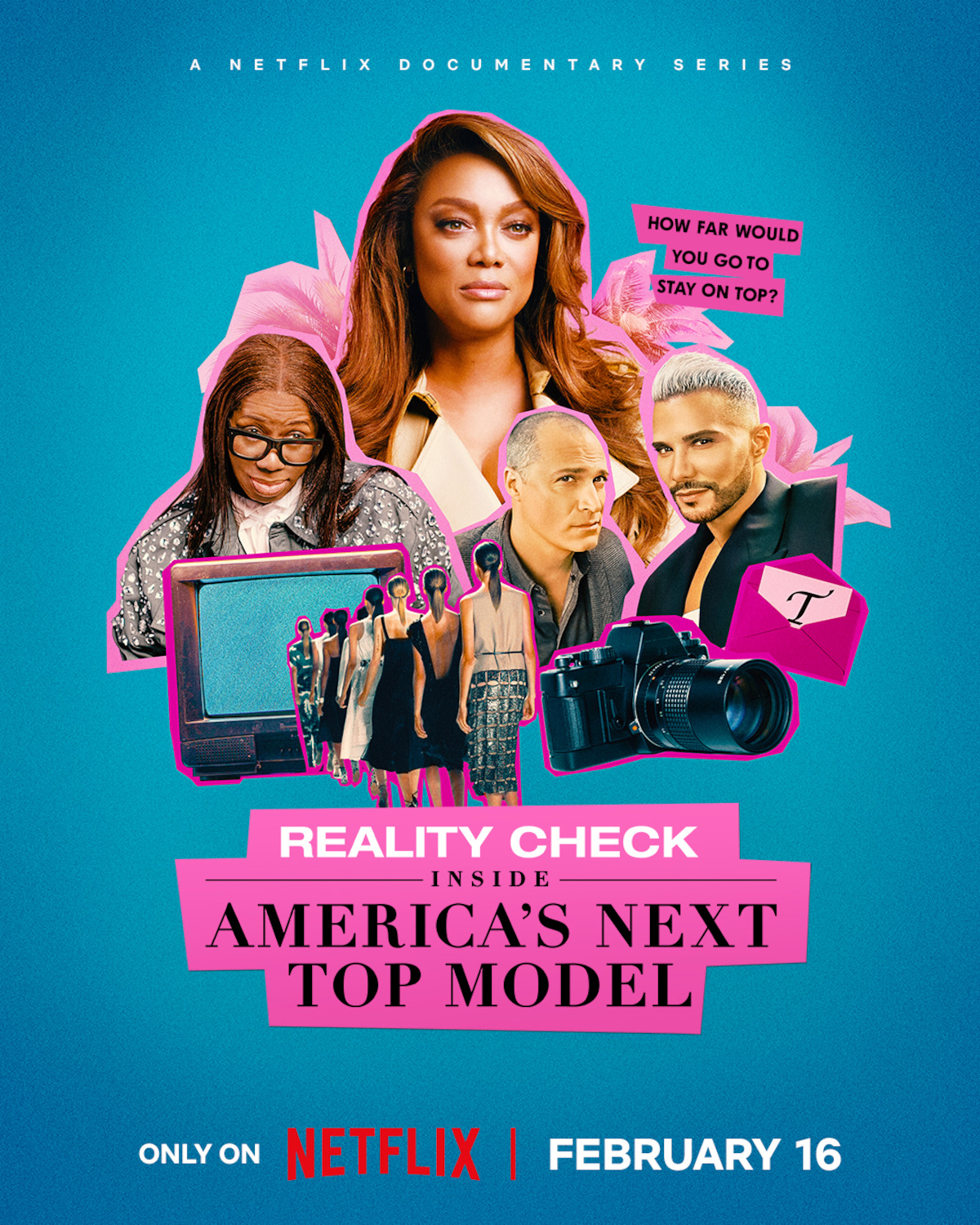
If you think Tyra Banks takes accountability for her role in America’s Next Top Model, the new Netflix documentary suggests otherwise.

“What if I made a show that showed what it took to be a model?”
Tyra Banks, Episode 1
That is how Tyra Banks introduces the origins of America’s Next Top Model in the three-part Netflix documentary examining the show’s legacy. When ANTM launched in 2003, alongside American Idol and the first wave of competitive reality television, it sounded progressive. The first episode sets this story up- Tyra pitching her idea for a show to others and bringing them on board. Along with Ken Mok, they are set up as the heads of the project.
Like most women my age, I came to America’s Next Top Model as a teenager. I was about 15 when I first watched it. Danielle in Cycle 6 was my favourite. Melrose in Cycle 7 was really cool (she, like, removed the ‘issa’ from Melissa Rose and had a cool name! How edgy!) . In the UK it aired in that hallowed teatime slot, when I would sit with my sister and mum after school. It felt glossy. It felt empowering.
The Original Promise of America’s Next Top Model
Watching the Netflix documentary now, with interviews from former contestants and judges including Jay Manuel, Miss J and Nigel Barker, that origin story of empowerment feels strained.
Because alongside the mentorship were Brazilian waxes filmed for shock value. White stylists working on Black hair without the skill to do it properly, leaving bald patches in the process. Girls edited into racist tropes or the “mean model” trope. A bagel shown three times to construct a narrative about weight. Medical emergencies, including hypothermia during a pool shoot, treated as compelling television.
America’s Next Top Model was pure exposure, humiliation TV. Why did I not see it for what it was? Hindsight is 20:20 it seems.
As the ratings grew, so did the spectacle.
Spectacle, Storylines and Manufactured Drama
Contestants dangled over pits. They posed with bird seed and pigeons on their heads. They navigated towering heels in homage to Naomi Campbell. They were covered in bugs. One cycle staged a photoshoot around homelessness, asking young women to perform vulnerability beside real unhoused people. Another centred on the theatrical consequences of smoking. A contestant was asked to pose as if shot, despite her mother being paralysed in a real shooting.
These were not isolated missteps. They were recurring design choices.
And then there was Milan.

Shandi’s storyline remains one of the most difficult parts of America’s Next Top Model to revisit. I have always liked Shandi. She came across as thoughtful and gentle, someone easy to root for. In Cycle 2 she was given a makeover, her confidence visibly built. She was framed as a success story.
She was then flown to Italy and filmed drinking. She was put into a position where Italian men spent time with them, drinking wine in a hot tub. She was drunk. She was filmed cheating on her boyfriend. She called him to tell him and it was all filmed. Cameras rolled as this girl was curled on the floor in the fetal position crying. The footage became a narrative arc. “The girl who cheated.”
In the Netflix documentary, Tyra Banks suggests production was “not her territory.” Executive producer Ken Mok describes the show as a documentary and insists “everything was always going to be filmed.”
That explanation does not hold.
Quick Instagram break. Follow me for these vibes:


Tyra Banks was not a peripheral presenter. She was executive producer of America’s Next Top Model. The show carried her name, her authority and her promise of mentorship. When she distances herself from the mechanics of production, she distances herself from responsibility for what that production did to young women in their late teens and early twenties, isolated, ambitious and under constant surveillance.
Where were the chaperones? Where were the girl’s advocates? There were none. This was car crash TV. Don’t stop rolling. Film the worst moments of a girls life for ratings!
Tyra Banks and the Question of Responsibility

Let’s be clear, I’m focusing on Tyra because it was her show. She was the brand. She lasted the longest of the original cast. I’m not absolving the rest of thier responsibility, of thier shocking treatment of young hopeful girls, but Tyra was the model. She positioned herself on the show as the mentor, the big sister, but as the seasons dragged on it was clear that the contestants were just fodder.
Throughout the documentary, Tyra returns to a familiar justification. “The industry was narrow.” The early 2000s were different. “Bosses had bosses.” Looking through a 2020 lens, she can see how some moments read differently now.
The fashion industry was brutal. That is true.
It does not absolve her.
In her own confessions the network head struggled to get her on the phone towards the end. It was her show. She built a show around young women’s bodies, fears and ambitions. She shaped how their stories were told. She decided which narratives were amplified. The language of empowerment came from her mouth. The tears were demanded in her voice.
That is what makes the Tiffany moment from Cycle 4 impossible to minimise.
The Tiffany Blow-Up: Power on Display
When Tiffany was eliminated in a double cut, she did not cry. She accepted the result with humour as she hugged the other girls.
Tyra Banks did not.

That scene.
“I was rooting for you,” she shouted, accusing Tiffany of not wanting it enough. Composure was framed as ingratitude. The elimination became a speech about Tyra’s own disappointment and life experiences.
In the Netflix documentary, Tyra says she took it too far. Not that she shouldn’t have done it at all, but just too far. She describes the moment as hard on her.
Hard on her.
A young woman stood silent while a multimillionaire executive producer demanded a performance of grief for television. The power imbalance was absolute. The cameras stayed on.
What Happened After the Cameras Stopped Rolling
And we watched. We quoted it. We loved it. I did. I was 15 and hyper aware of my changing body. I began to comment on the girls’ faces and weight as if that was normal. Some of them were only a few years older than me.
For many contestants, the promise of industry access after America’s Next Top Model did not materialise. Danielle has spoken about designers being reluctant to book reality television faces. Former contestants describe sitting in model apartments after filming ended, waiting for castings that never came. Portfolios built around extreme concepts were difficult to use professionally. The show created visibility, but also stigma.

Tyra now acknowledges that “not everyone would become a star” but was that really explained to the girls? She does not fully acknowledge is that America’s Next Top Model often prioritised storyline over sustainable careers. The contestants were invaluable while filming. After that, far less so.
The pattern extended beyond the models.
After 17 seasons, Nigel Barker, Jay Manuel and Miss J were removed from the show. Fired. Given the axe. Nothing about it was respectful. In the documentary, Tyra again suggests the decision came from above her.
Jay Manuel, one of the most compelling voices in the Netflix series, describes feeling unable to say no. Emails ignored. Pressure to continue. Disagreement framed as betrayal. On camera, warmth. Off camera, silence.
Miss J reveals she suffered a stroke and lived in hospital for over a year. Jay and Nigel visited. Tyra did not. When asked, Miss J raises an eyebrow and says, “Not yet.”
Part of me does not weep for these judges, they were complicit in the shows shocking actions (First they came for the communists, eh?). However, seventeen seasons is a lifetime of work. It deserves more than distance.
The Show’s Cultural Legacy
Several former contestants describe America’s Next Top Model as a reflection of its time. Whitney in particular acknowledges that was just how the industry was and was proud in her role in changing parts of it. The world was fatphobic, homophobic, racist and explotive. It was the early 2000s.
Can confirm. I was there.
But America’s Next Top Model did more than reflect that culture. It amplified it. It turned insecurity into format. It refined humiliation into narrative. It trained viewers to see breakdown as content.
The Netflix documentary presents Tyra Banks as humbled, even grateful, that the reckoning is happening. She says she is glad to be called out.
What it does not convincingly demonstrate is accountability.
Explanation is not the same as responsibility.

This post is part 1 of 2 about this documentary. Part 2, covering the problem of 2000s diet and weight obsession, is live now.


