
A Court of Thorns and Roses healed my reading habits, and probably mental health. Hear me out.
During Lockdown, I was feeling low. I didn’t do well with the lack of routine, the feeling of being stuck and the monotony of the day. As an extroverted introvert I appreciated the me time but it wasn’t balancing out with time with other people.
My best friend came to my rescue in the form of a book. The red and black cover gave nothing away and I was told it was ‘fairy porn’.
Porn!

Now, I read a lot but was kind of stuck up about it for so long. In my 20s, I felt like if I read a book it should have some ‘value’ to my time, that reading it should be ‘notable’. As a result I read a lot of whiny, depressing books from the Booker Prize list. (looking at you The Discomfort of Evening).
Suddenly, here was this… nonsense book that was never going to win some international literary prize. It’s one that would feature on TikTok rather than a TED Talk. I loved it. I was hooked. It was so easy to immerse myself and just have fun with reading again. (I completely attribute these books with my current obsession with Dune.)
Turns out, “fairy porn” was actually high fantasy with a feminist backbone and it was doing more for women’s literature than half the Booker list ever did.
A Court of Thorns and Roses: The Rise of the Feminist Fantasy
Fantasy has always promised escape, dragons, quests, and impossible love. But, for the longest time, women were written as the prize, not the hero. Enter A Court of Thorns and Roses (ACOTAR), Sarah J. Maas’ sweeping, seductive fantasy series that flipped the genre on its head.
For many readers, A Court of Thorns and Roses first appeared back in 2015, a bold, sensual twist on classic fantasy that quietly built a cult following. But it was during lockdown that the series truly exploded. I came to it late, but right on time for the 2021 release of A Court of Silver Flames, when BookTok, pandemic escapism, and Maas’ pro-woman world all collided.
I’m not usually the type to fangirl (liar, this blog is literally fangirl fodder), but honestly? This woman reshaped the way I think about fantasy. She gave us heroines who are fierce, flawed, and unapologetically powerful and I will never stop being grateful for that. That’s queen behaviour, and I’m here for it.

What had started as a single fairytale retelling had evolved into something bigger; a fever dream of female desire, strength, and autonomy taking centre stage.
A High Fantasy for Women, by Women
Traditional fantasy is a man’s game. Don’t get me wrong, I love the classics and they were a very influential part of my teenage years. I would study for my Highers while watching The Fellowship of the Ring on loop (I needed to get 2 timed essays done before the hobbits got to Rivendell.)
Tolkien’s Lord of the Rings gives us almost no women, and those who do appear (Galadriel, Éowyn) exist to support the male journey. Maas’ world, on the other hand, is unapologetically feminine. Her heroines are complex, powerful, and yes… sexual.
Quick Instagram Break! Follow me for these vibes:


Feyre isn’t rescued by a prince. She rescues herself, repeatedly. The politics of Prythian, Mass’s magical, fairy ruled world, might involve crowns and courts, but they’re driven by women who command, challenge, and choose. It’s high fantasy, sure, but it’s also a mirror held up to every woman who ever felt sidelined in a story she was meant to star in.
The Power of Pro-Sex Storytelling
Let’s talk about the thing everyone pretends not to talk about… the sex. Yes, A Court of Thorns and Roses is often labelled “smutty,” but that label says more about the discomfort around female desire than about the writing itself.
Maas’ depiction of intimacy is liberating. These scenes are about agency, pleasure, and equality. They allow women to read about sex without shame, and that’s revolutionary in a genre that’s spent decades sanitizing or erasing female pleasure entirely.
The pro-sex narrative here promotes validation. It tells women their bodies and their desires are sources of power.
When the Marketing Missed the Point
Of course, controversy followed. The early marketing of A Court of Thorns and Roses blurred the line between Young Adult and New Adult and suddenly, bookstores were shelving explicit, adult fantasy next to The Hunger Games. Cue the pearl-clutching.

But that uproar revealed something deeper: the industry’s discomfort with women’s sexuality, especially when it’s paired with emotional depth and literary success. Male authors have written violent, sexually charged epics for decades without question. When women write them, it’s a “problem.”
The YA mislabeling was a reminder of how often women’s stories are underestimated, boxed in, or misrepresented.
Beyond the First Book: The Court Expands
If A Court of Thorns and Roses lit the match, its sequels burned the world down. Each installment grows bolder, not just in its “spice” level, but in emotional depth, world-building, and female complexity.
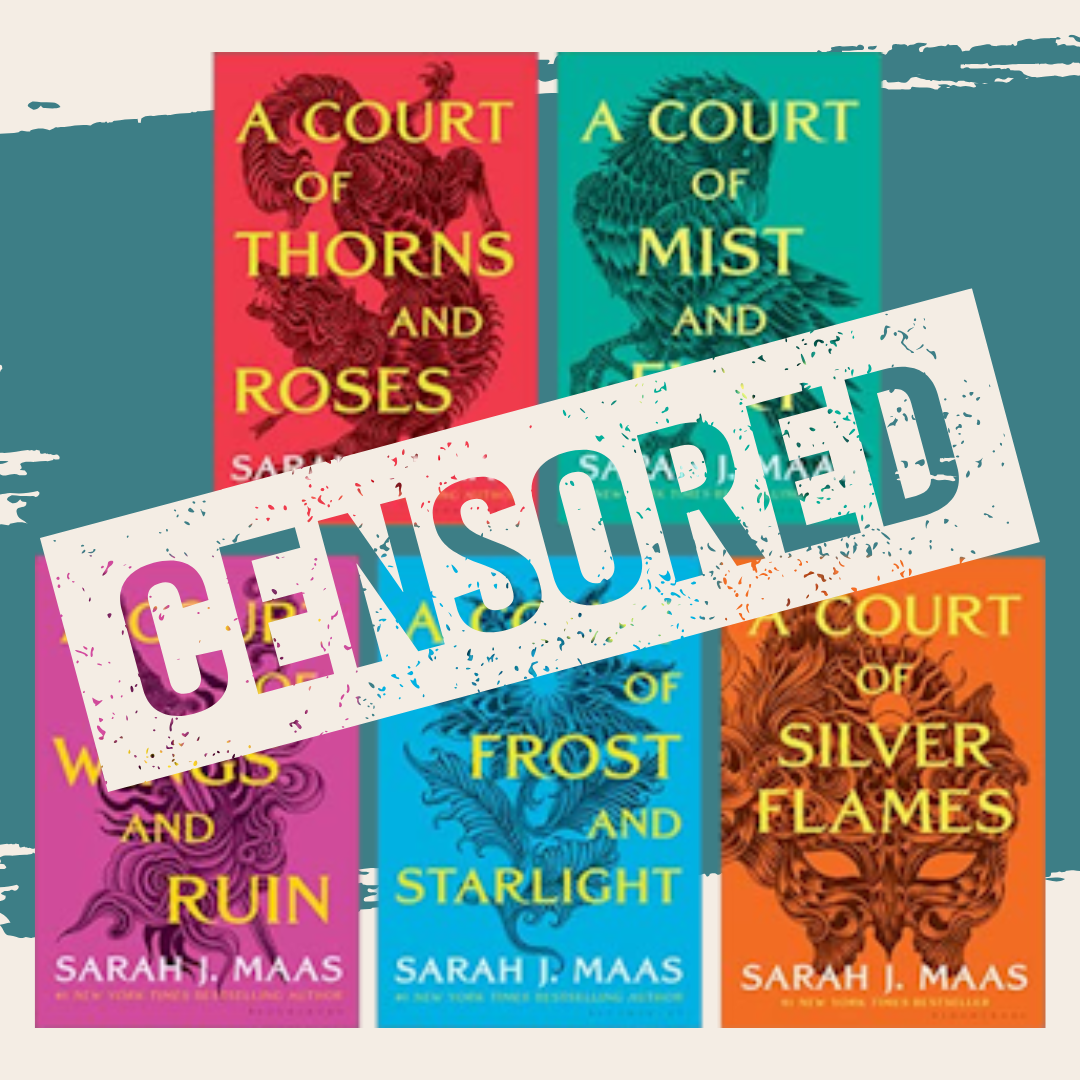
A Court of Mist and Fury became a cult favourite for good reason: it gave readers a heroine who healed, grew, and refused to be tamed. Later books (Wings and Ruin, Silver Flames) widened the scope, centering other women (Nesta, Elain, even the priestesses) in stories of trauma, power, and reclamation.

The Second Draft Spiceometer™
(For academic purposes, obviously)
| Book | Spice Level | Vibe |
|---|---|---|
| A Court of Thorns and Roses | 🌶️ | Fairytale with bite — the gateway drug. |
| A Court of Mist and Fury | 🌶️🌶️🌶️ | Emotional + physical awakening; the feminist favourite. |
| A Court of Wings and Ruin | 🌶️🌶️ | War, politics, and pining — less spice, more stakes. |
| A Court of Frost and Starlight | 🌶️ | Cosy, post-battle healing — a breather between chaos. |
| A Court of Silver Flames | 🔥🌶️🌶️🌶️🌶️ | Burn-it-all-down energy; the most explicitly feminist and sexual. |
Because yes, the heat matters… not as gossip, but as symbolism. Maas’ “spice” mirrors empowerment: women discovering agency, choosing pleasure, and refusing to be punished for it. Plus, it’s just a jolly good read.
Why It Still Matters
A Court of Thorns and Roses gave us permission to enjoy something that’s beautiful, brutal, and unabashedly sensual. It’s a love letter to the women who grew up reading about boys saving kingdoms and decided it was their turn.
This is the kind of storytelling that expands what fantasy can be. It’s about women taking up space in books, in fandoms, and in desire itself.
My husband still thinks this whole thing is a bit weird. Men don’t share their explicit video links with each other so why are women sharing these books?
I think he’s just jealous.
Leave a Reply