

David Guetta perfected big, glossy, slightly cheesy dance music… and that’s exactly why it worked.

WireImage
The Name, the Vibe, the Era
G-wu-etta? G-uh-etta? I’m not convinced I’ve ever pronounced it correctly. But pronunciation aside, the cultural impact David Guetta had on late-2000s club culture is undeniable. His name didn’t need explaining.
This was an era of sticky floors, cheap drinks, and DJs who felt like celebrities rather than background noise. It wasn’t pop, at least, not in the sugary, lyric-led sense. This was dance music that had moved from the margins to the centre of the room, away from the weird techno-warehouse thing only the underground kids knew about, and into something every girl in a bandage dress could throw her arms up to.
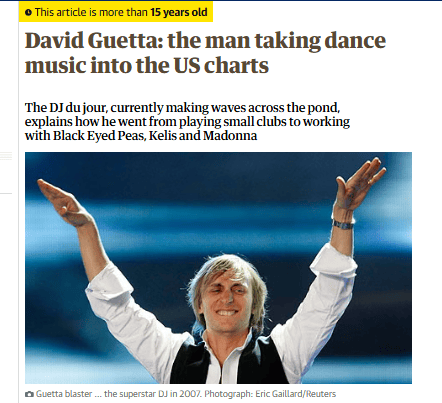
This was not music for gatekeepers, and thank God, my taste at the time could not have handled the responsibility. You didn’t need to know what BPM stood for to enjoy it (Beats per minute. Guetta’s songs average in the 120s to 130s in case you were interested).
Guetta arrived at exactly the moment club culture became louder, glossier, and more global.
The Collaboration Machine
David Guetta was the daddy of big collaborations. Nicki Minaj. Sia. Usher. Rihanna. He had an almost unmatched ability to take massive voices and drop them onto beats that were instantly singable, instantly danceable, and absolutely unavoidable. You heard it and moved.

That talent peaked with ‘Nothing But the Beat‘. Released in 2011, it’s an album built entirely on collaboration. Every track features a guest artist. Every. Single. One. It’s maximalist, glossy, and unashamedly mainstream – and audiences loved it for that.
These tracks followed you from city to city. Titanium. Turn Me On. Without You. Little Bad Girl. Songs so omnipresent they blurred into the walls of clubs everywhere.
Love at First Listen
I was at an age where clubbing every weekend – and often mid-week as a student – was a major pastime and a pillar of my routine. I’d pull on whatever dress I’d bought at New Look that week and head to the mainstream clubs to throw major shapes* to the latest bangers.
*Please note, I was terrible at the shape throwing and should my children ever read this in the future I am mildly sorry for calling it throwing shapes.
It was in these sticky floored, dark and packed environs that I first noticed David Guetta’s 2010 servings. I can still picture it now- the smell of cheap vodka, a queue for the toilets that never moved, and someone inevitably crying over some relationship drama in the corner just as the drop hit.

I was dancing to hits from the ‘One More Love’ album – a more commercialised reworking of the 2009 One Love album. The mega track When Love Takes Over with Kelly Rowland had me throwing my hands in the air and still gets me singing (albeit badly) in the car now. Sexy Bitch with Akon had us all passing judgements; Akon was struggling to find the words to describe a girl without being disrespectful before settling on the track’s title. Confusing. Memories with Kid Cudi, Gettin’ Over with Fergie, Who’s That Chick? With Rihanna… each track had a simplistic, repetitive hook ideal for dancing to at 2am.
Even now, sticking on a David Guetta playlist gets me through a massive pile of laundry, dancing round the kitchen at 10am. It’s less strobe lights and sweat, more strip lighting and suds.
Quick Instagram Break! Follow me for these vibes:


Le Fromage
Let’s acknowledge his earlier album covers for what they were: a perfect time capsule of the cool club guy aesthetic. Expensive T-shirt. Sunglasses indoors. Long hair falling just past the shoulders. Peak 2010, that strange transitional moment when emo fringes were being grown out but not quite left behind.
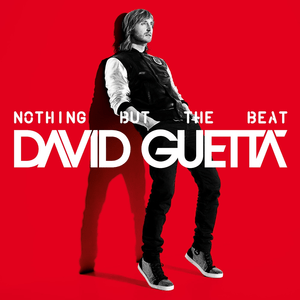
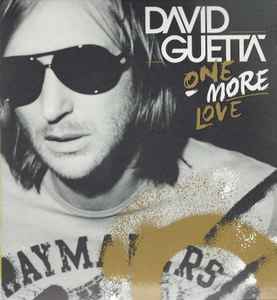
In the 2020s, branding is a word that exists well beyond the 1960s boardrooms of Mad Men. It’s something Gen Z actively understands, chases, and dissects; explained on TikTok, studied as an art form, and deployed with intent. Into that conversation, I offer the cheese of David Guetta.
And by cheese, I don’t mean the kind reserved for age-appropriate family discos or holiday clubs. I mean the embrace of commercialism paired with a genuine desire to have a good time.
David Guetta never pretended his music was underground, ironic, or above the crowd. It was glossy, obvious, and engineered for mass enjoyment, anD it knew that.
That balance is especially clear in Club Can’t Handle Me Right Now, a track that pairs David Guetta with Flo Rida (arguably the patron saint of unapologetic, high-gloss cheese). The phrase itself was already internet fodder by the time the song dropped, the kind of exaggerated confidence people used ironically in captions and jokes. Rather than distancing himself from that, Guetta leaned straight into it. The result is a track that’s both ridiculous and effective: knowingly over-the-top, but delivered with enough polish and scale to feel cool anyway. It’s cheese that winks without collapsing into parody.

Did it make you cooler? Probably not. Did it make the night better? Absolutely.
Still Here, Still Headlining
David Guetta isn’t some relic of the past, wheeled out for nostalgia slots and anniversary sets. Just this month (January 2026), he announced another Ibiza residency at UNVRS, which must be extremely cool, if only because it doesn’t use vowels. The man remains firmly booked, busy, and very much in demand.

He was named DJ Mag’s 2025 DJ of the Year for the fifth time. Last year, he released a single a month. Scroll through footage of any major dance festival and there he is, still commanding enormous crowds, still delivering exactly what people came for. This isn’t accidental longevity either. It’s the result of understanding what mainstream dance audiences want, and never pretending to be above it.
It also helps that he reportedly earns somewhere between $800k and $1 million per show, which suggests the demand is not purely sentimental.
If you want to finish this whole David Guetta journey on a high, I’d recommend his Ultra Miami Festival set from 2023. It’s a straight-up nostalgia hit, packed with accents, self-indulgence, and enormous drops — the kind of set that reminds you why his music worked then, and why it still does now. You might roll your eyes. You’ll probably smile. You may even end up loving him a little bit more by the end.
Oh, and the pronunciation? Obviously we default to Mr. Flo-Rida himself. ‘I see you Dee Get-ta’.


