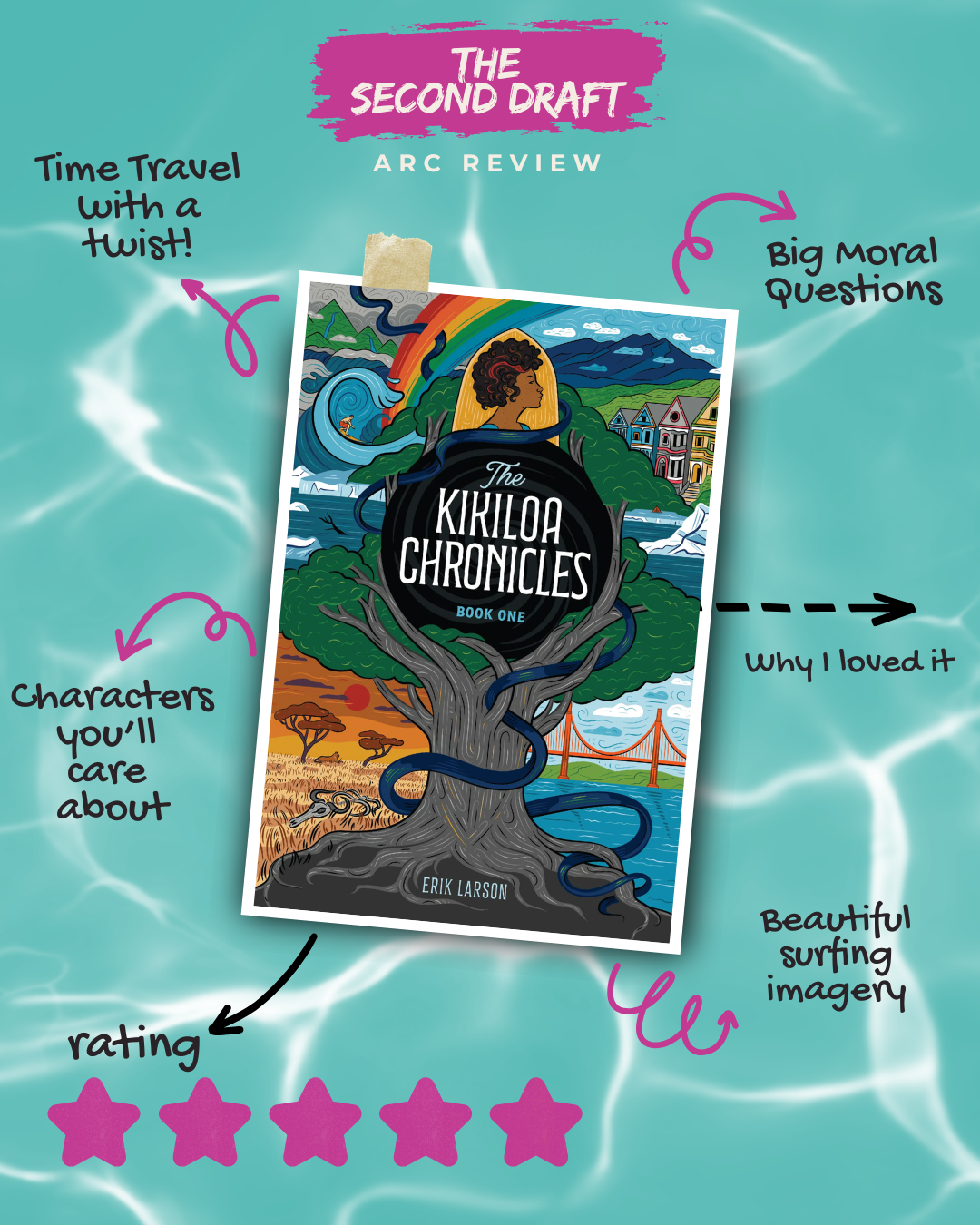
Erik Larson’s ambitious sci-fi novel blends philosophy, parallel timelines and unforgettable surfing imagery into one of the most original books I’ve read this year.

I won’t pretend this is a simple novel, because it isn’t. The Kikiloa Chronicles by Erik Larson asks its readers to juggle philosophy, parallel timelines, mythology and science all at once. Somehow, though, it never loses its sense of wonder.
Time Is a Wave
Kikiloa is thirteen years old, mischievous, endlessly curious… and also Mitochondrial Eve, the grandmother of humanity. Stay with me.
She is a Time Surfer, someone able to look between the lines of history and consciously experience multiple parallel timelines at once. If you’ve ever seen Sliding Doors, imagine Gwyneth Paltrow experiencing both possible versions of her life simultaneously, only stretched across the history of humanity.
The surfing imagery isn’t just a backdrop. It forms the language of the entire novel. Larson, himself an island dweller, fills the book with metaphors of waves, currents and tides until time itself feels like an ocean. Decisions ripple outwards. History swells and crashes. I don’t think I’ve ever read a novel with quite so many shakas, but it never feels gimmicky. It’s simply part of the world the story inhabits.

Philosophy Without the Lecture
Time Surfers search for “big waves”: moments in history where a single event changes everything that follows. Once you can see those moments coming, though, another question emerges.
Should you interfere?
Should you stop a disaster if you know it’s coming?
Or is changing history a greater act of violence than allowing events to unfold?
One of the things I appreciated most is that Larson never stops the story to lecture the reader. These questions emerge naturally through Kikiloa’s relationships with other Time Surfers, many of whom hold completely different philosophies about what their responsibilities should be. The novel trusts the reader to wrestle with those ideas rather than handing out easy answers.
Why Kikiloa Stayed With Me
For me, though, the emotional heart of the novel wasn’t the time travel. It was Kikiloa herself.
What is time to one who can traverse the ages? There is a risk that a character can develop a God complex or become detached from the human emotions felt day to day, a feature discussed at length in the story.

Reading this as the mother of two young children, I found myself seeing her less as an all-powerful mythical figure and more as a parent. She is fiercely protective, endlessly patient one moment and impulsively childlike the next. Other characters become frustrated by the decisions she makes, or the moments when she deliberately chooses not to act, but that’s exactly how children often see their parents. Sometimes love means stepping in. Sometimes it means standing back and allowing people to find their own way.
That’s what stayed with me long after I’d finished reading.
Overall?
The Kikiloa Chronicles isn’t a book you’ll race through in an afternoon. It’s one you’ll find yourself thinking about afterwards, turning over its ideas long after you’ve closed the cover. If you enjoy speculative fiction that isn’t afraid to ask difficult philosophical questions while still delivering memorable characters and a vivid sense of place (no mean feat), this is well worth your time.
Rating: ★★★★★
Please note: I received a free review copy of this book from The Niche Reader. All opinions are my own.
Author Details:
Website: https://kikiloachronicles.com
Instagram: @kikiloachronicles




Leave a Reply