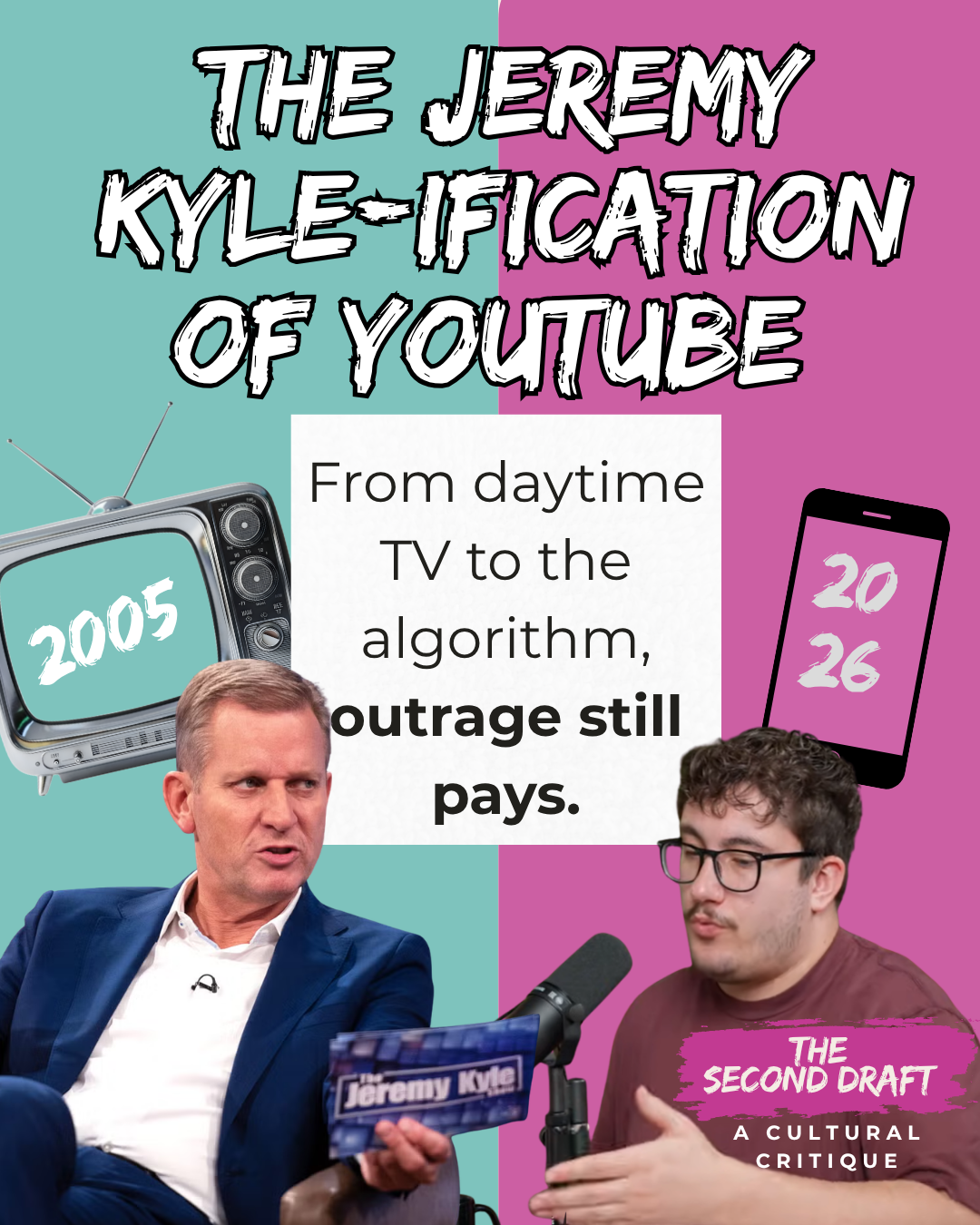
Caleb Hammer, Jeremy Kyle and the uncomfortable economics of outrage.
I’m no digital baby. I’ve been around the internet since dial-up; I voted in the first Pop Idol contest online! (I voted for Gareth Gates.)
I’ve been here long enough to watch entire breeds of internet celebrities appear, disappear and, perhaps most strangely, slowly mutate into worse versions of themselves. Think GreyStillPlays morphing from genuinely inventive gaming videos into repetitive mobile-game content, or the various spirals of Jeffree Star.
There’s a particular kind of decline I’ve started noticing. A creator finds a brilliant concept. The concept attracts an audience. Then one slightly more outrageous video performs better. So they do another. And another.

Eventually, you’re still subscribed to ostensibly the same channel, but the thing you originally subscribed for has almost completely disappeared.
And the really annoying thing?
We did this.
When a good concept works
This brings me to Caleb Hammer.
Caleb Hammer started his youtube show Financial Audit in 2022. He’s filmed over 300 episodes and runs successful spin off shows on his subscriber platform Hammer Elite. The premise? Budgeting and being mindful of your spending.
I found the channel late last year and was instantly hooked. People who were very open and honest with their financial habits and records admitted to having unreasonable levels of debt. Going through the accounts, it became clear their spending was not matching their income. Some people could not be trusted with credit cards. Some people consolidated debts with loans only to rack up more debts. It was fascinating.
Caleb Hammer became known for calling people out on their bs- fast food spending rather than meal prep, frivolous gas station spending, subscriptions to things they didn’t need. His ‘take no prisoners’ approach made the world of finance accessible, compared to the much more conventional and plainly dull advice of others on the platform like David Ramsey (no shade, I like a Dave Ramsey video, but they don’t have the same zing). The roasting didn’t initially bother me because it felt reciprocal. Guests knew the format, Caleb frequently made himself the butt of the same jokes, and the teasing existed alongside genuine practical help.
I’ll admit, there was an element of car crash tv. Here were people who were struggling and making bad choices, the type of choices that made you feel better about those you made (evil as that is to admit). But it would all be ok, Caleb would give them budgeting tools, advice about what debts to tackle first and talk about how best to use the assets and qualifications they already had.
The budgeting part was the core of the show and it always came back to that- live in your budget.
The spectacle wasn’t the product. It was what made the product entertaining.
Somewhere along the way, those two things seem to have swapped places.
When the spectacle becomes the product
Recent episodes have been shocking, seemingly more for show than for advice. In one such episode, a white man repeatedly used racial slurs (citing the ‘n word is just a word’ while looking Caleb’s black employee in the face). The man’s financial situation seemed entirely self-inflicted but without desire to fix it. It felt like he came on the show to be shocking and ‘tell the people’ whatever he thought the people had to know.

And the change isn’t confined to thumbnails.

A standard 1 hour 30 min episode won’t have financial records looked at until about 40 minutes in. Even then, there are the internal show adverts, product placements and sponsors to be mentioned. The joy of looking for serious financial data is gone.
I came across a comment saying it was like watching Jerry Springer. It wasn’t entirely wrong, but I would edit that towards the UK talkshow heavyweight Jeremy Kyle.
We’ve seen this show before
Jeremy Kyle was a daytime TV staple of the UK 2000s. The format was simple, people argued in chairs on a stage, he baited them, got them to admit their failings and secrets then they were sent to counselling. Think lie detectors to find out if someone has cheated, DNA tests to find out the father of a baby. It was compelling.
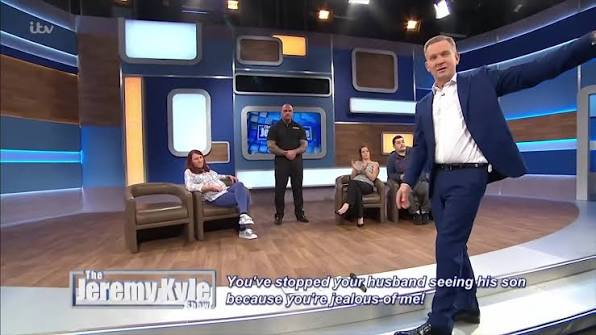
It was also exploitative as hell.
Kyle would prowl around his stage shouting moralistic comments about ‘do it for your kids!’, ‘use your brain before your bits’… you get the idea. The guests, almost always chavs and neds, ‘the sort playing loud music on the bus’, would be belittled. Their lack of education and career prospects were held against them in the court of parenting ability.

After the carnage had been wreaked, Kyle would often sit below the guests on the edge of the stage, his voice suddenly softer. Now that everything was “out in the open”, the hard work could begin. Counselling would be offered. Drug treatment. DNA testing. Aftercare.

Maybe some people genuinely benefited from it. But it also gave the spectacle a benevolent ending.
Maybe it did help. Who knows. But we need to ask at what point does “helping” become the justification that allows us to enjoy watching someone be humiliated?
Helping, or just watching?

The comparison isn’t perfect, of course. But what bothers me about Financial Audit now is the same thing that made Jeremy Kyle so uncomfortable in retrospect: the helping is still there, but increasingly it feels like permission for the spectacle around it.
I understand the problem, it’s us. The people who watch this sort of exploitative content and give it the attention, spurring these creators to keep chasing shock value.
And this is where my righteous indignation becomes slightly inconvenient.
The problem is, I clicked
I clicked.
Of course I clicked.
The increasingly ridiculous guests are annoying me, but apparently not enough to stop me finding out why THIS DELUSIONAL 27-YEAR-OLD THINKS CREDIT CARDS ARE FREE MONEY.
YouTube doesn’t know that I clicked disapprovingly. It knows I clicked.
Maybe I’m wrong and Financial Audit will keep growing. It probably will. Jeremy Kyle lasted fourteen years.
That’s almost worse.
I’m not really watching the death of a YouTube channel. I’m watching a good idea being slowly replaced by the version of itself we’re apparently more willing to click on.
Twenty-five years after Gareth Gates, apparently I’m still voting online. I’m just less happy with the winner.

Cultural Commentary by Emma Sinclair
Emma Sinclair is a Scottish writer and book reviewer behind The Second Draft. She writes about books, culture and the things she can’t stop thinking about, from speculative fiction and internet history to the odd ideas hidden between the pages.
Follow me on Instagram!