Music before streaming was just better.
Hear me out.

It was 2006. After a few years of downloading songs* off LimeWire onto various MP3 players and burning CD mixes for my Walkman, I finally had a new toy. That Christmas, I was one of the lucky kids who got an iPod Nano, the one with the groovy new colours. Mine was blue.
(*The worst download experiences were when you thought you were getting a Fall Out Boy song after hours of waiting, only for it to be… adult content. Grim.)
It felt like part of a very specific 2000s high-school identity. Blazer with the big pockets. School books covered in super deep and meaningful song lyrics (I was bad for My Chemical Romance ones). Side fringe. In my school it was fashionable to wear a black vest or t-shirt over your white shirt, and universally emo to smear black kohl liner along your waterline. And of course: an iPod with white headphones.
For beauty products that were unequivocally 2006, see this cheeky post I made a few months back.
The first music library I ever created
I loved my Nano. It looked cool. It felt cool. It had that clicky button thing that made you feel faintly futuristic. The volume was easy to control. I spent hours making sure all the files I had 100% “legitimately” acquired had the right names and capitalisation so they were easy to search for.
You could store photos too. Other than album art, this was not the audiophile’s favourite feature. Photos took up space, and that was precious real estate when you needed to have all the latest albums and Hawthorne Heights recommendations you’d been given.
(Sidebar here, but I’ve not met anyone who really liked Hawthorne Heights. It felt more like you needed to have them on your ipod to signal just how serious about being emo you were. If I’m wrong, let me know.)

CD Walkmans and tape players fell into twilight. The iPod was a different ballgame. The sheer amount of music you could carry without pulling out anything else was amazing. It was convenient, fashionable… and somehow private.
As a teenager trying out new personalities and genres, I relished the fact that I could acquire and try out different types of music as I figured out who I was.
I would rent CDs from the library and rip them onto my home computer, where they would eventually make their way onto my iPod. It was thanks to my local library that I ended up with a fairly serious Green Day collection.
My iPod as teenage identity
What kind of person would you find on my little blue iPod?

Alternative. Emo. Guitars. Boys in bands. NME-approved tastes. Fall Out Boy. My Chemical Romance. Klaxons. I wanted angry lyrics, loud choruses, and all the usual teenage stereotypes.
I blogged about how cool I felt NME was. Click here for the post.
I wasn’t as comfortable with dancing or pop music at seventeen as I was at twenty. That whole teenage thing of not fitting in, and not wanting to be mainstream, definitely lived in me (even though I had plenty of friends and was, in reality, extremely mainstream. I was full of it.)

Owning music made me a better listener
Looking back, what mattered to me was that I chose it.
This was music before streaming.
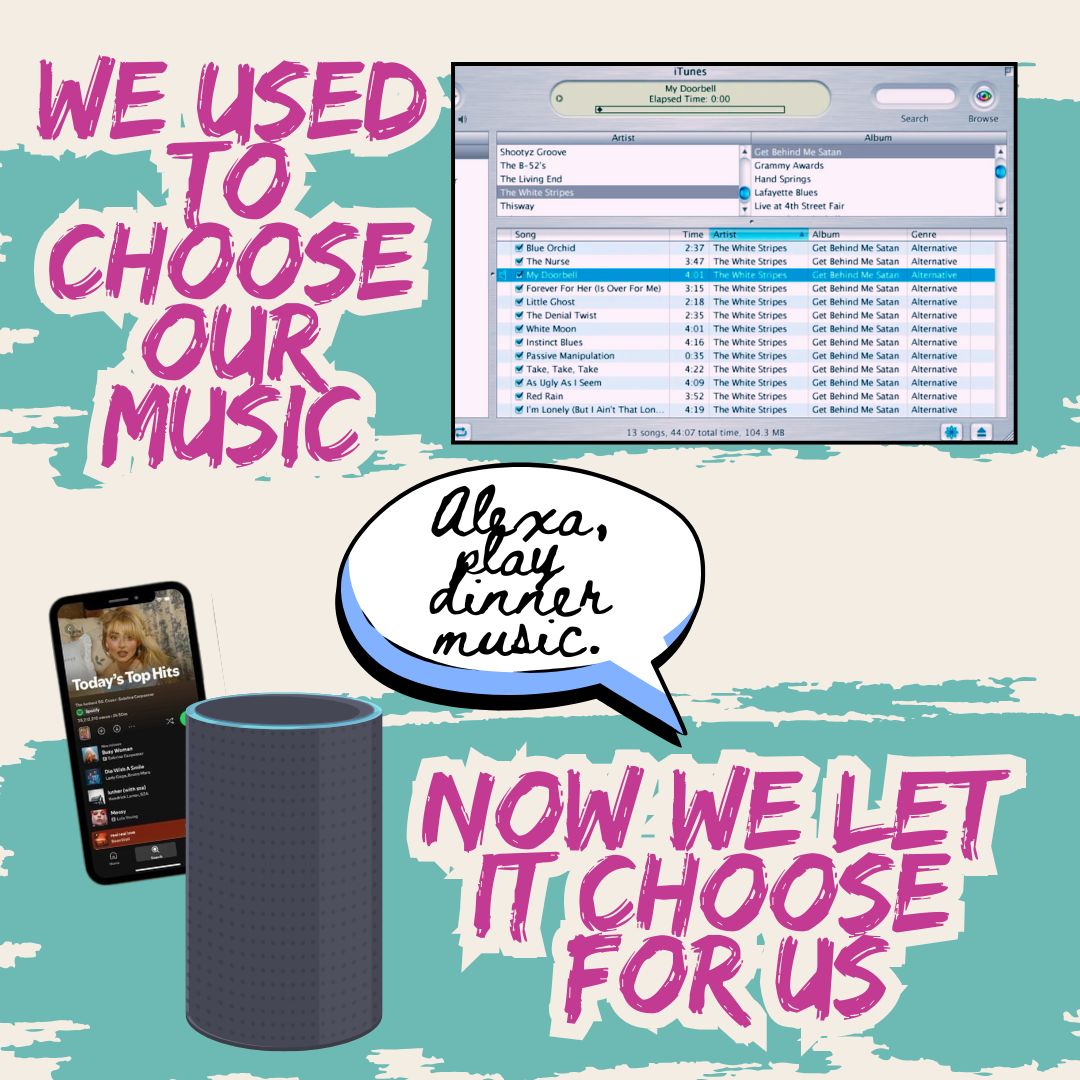
Every song on that iPod had to earn its place. In the spirit of Daft Punk’s Technologic, I had to find it, download it, rename it, organise it, decide it was worth taking up space. (Buy it, use it, break it, fix it!) If it annoyed me, it still stayed there unless I went back to the computer and physically removed it.
I curated it.
Quick Instagram break. Follow me for these vibes:


The new romance being offline

I’ve noticed recently that living an “analog life” has become a bit of a status symbol online. There’s a romantic idea attached to being offline and more mindful. Phones are being banned at concerts. Minimalist phones are being marketed as lifestyle upgrades. There’s a growing sense that, while sharing things online is fine, it doesn’t have to be constant.
When I think about it, my iPod is probably the best small example of that older relationship with media.
I could listen to songs hundreds of times, whenever and wherever I wanted (battery life allowing). I didn’t need a Wi-Fi password. I didn’t need data. If I wanted to share music with someone, I had to physically connect something with a cable. There were no live listening sessions, no instantly syncing tastes, no quietly broadcasting what I was playing to the world.
If you shared music, it had to be intentional.
From choosing music to consuming it
Downloaded songs were vetted. And because of that, they were committed to memory.
This is the bit I genuinely miss.

Now I’m bad for shouting at Alexa to put on something vague like “lo-fi” or “dinner time”. I often have no idea who the artists are or even what’s playing. I’ve become a passive listener who has let someone else do the work for me.
Don’t get me wrong, it’s incredibly easy. I love being able to find a playlist for a specific mood. I love discovering new artists through ‘artist radio’. I enjoy Spotify Wrapped and the sheer abundance of choice on offer.
But it can also be exhausting.
There are times I really long for my little iPod sitting in its dock, sticking it on shuffle, and knowing that I had personally picked every single song on the device.
When access was harder discovery felt better
In 2006, there was a sense of properly finding an artist and then going out of your way to enjoy them. When you talked to people, it wasn’t a given that they would have heard of a band you liked. You couldn’t instantly check. You couldn’t immediately sample their entire back catalogue on the spot.
Now, with unlimited access, there’s almost an expectation that you should be able to listen to anything right now, gogogogo!
When someone recommends a song, there’s a subtle pressure on you as the receiver to react to it in real time and I’m not convinced that improves the experience.
I don’t actually want to go back to 2006. I don’t miss slow computers, dodgy downloads, or manually fixing broken track names.
What I miss is being responsible for my taste.
My iPod didn’t just store music.
It made me choose it.


Leave a Reply to Emma SinclairCancel reply